Hot Springs Pools & Spas had been in business for 34 years when they became a client. Two locations then, growing toward four now across Greenville, Arden, Franklin, and Charleston. They had a data problem that looked like a marketing problem.
What We Found
Before we started, the business had no real way to know how many calls it was getting, only that the phones stayed busy across every store. The same phone number ran on the website, in Google Ads, on print signage, and on the Google Business Profile for every location, so a call could have come from anywhere and there was no way to tell. No one could say which salesperson was talking to which lead, or whether a call about a specific hot tub ever turned into a sale. Leads were getting missed, and nobody knew it was happening, because there was no system flagging it.
What We Built
We launched a new brand and a new website first. But the change that actually moved the business was less visible. Here's what we put in place:
A dedicated tracked number for every source. The website, each Google Ads campaign, each location's Google Business Profile, and Facebook each got their own tracked line, so a call is attributed to the exact channel that generated it, not just "the business line."
Every call assigned to a person. Calls route into HubSpot tied to a specific salesperson, so there's a record of who talked to which lead and when.
A real pipeline instead of a phone log. Every lead moves through a Hot Tub or Pool sales pipeline in HubSpot, from first contact to closed-won or closed-lost, instead of living in someone's memory or a notepad by the register.
Reporting that separates channels. Because every call and contact carries its source, we can see which channel is actually producing sales, not just which one is producing calls.
That's the boring part of marketing most agencies skip. It's also the part that turns ad spend from a guess into a number you can defend.
By the Numbers
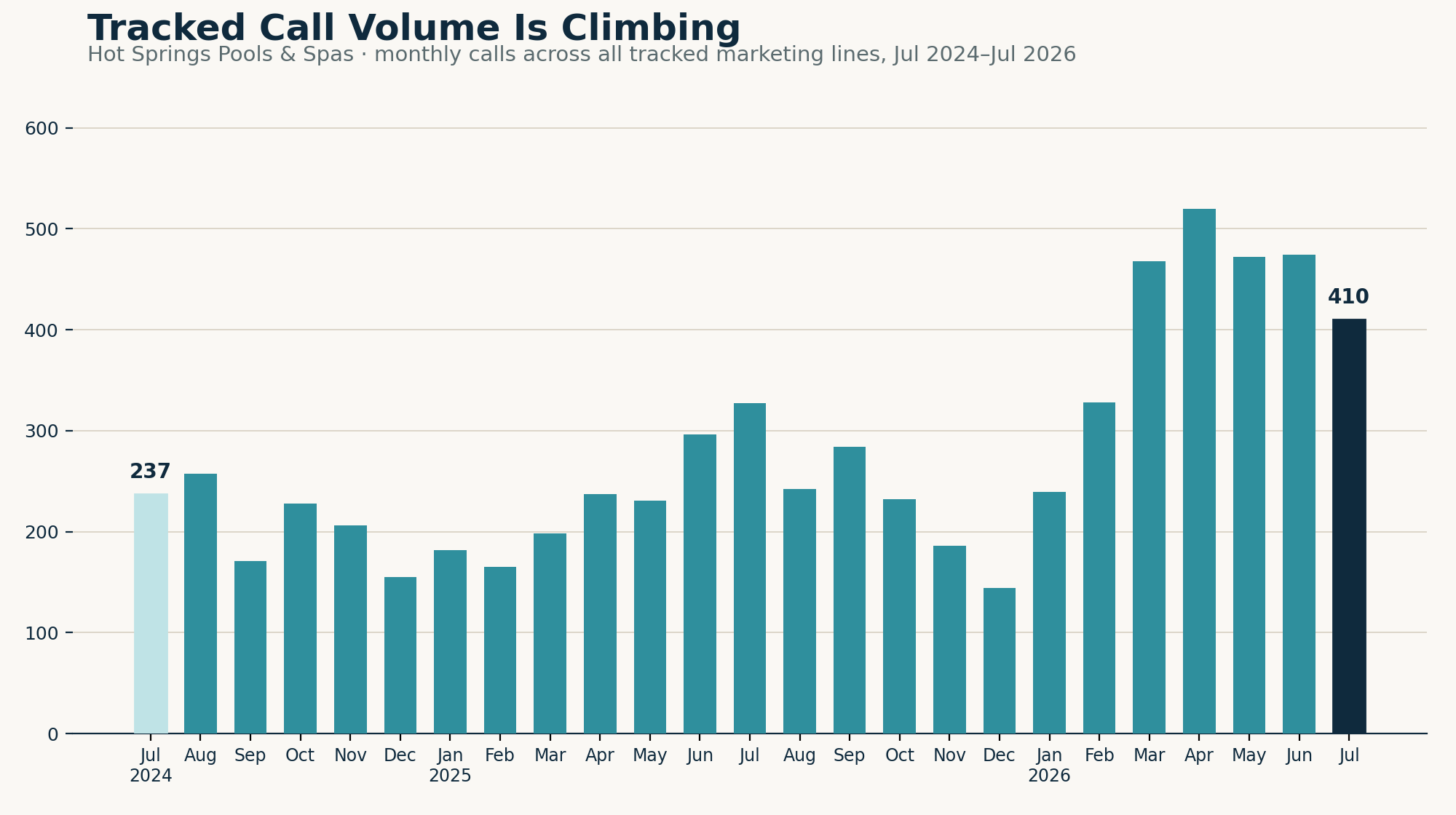
Hot Springs Pools & Spa's Call Volume
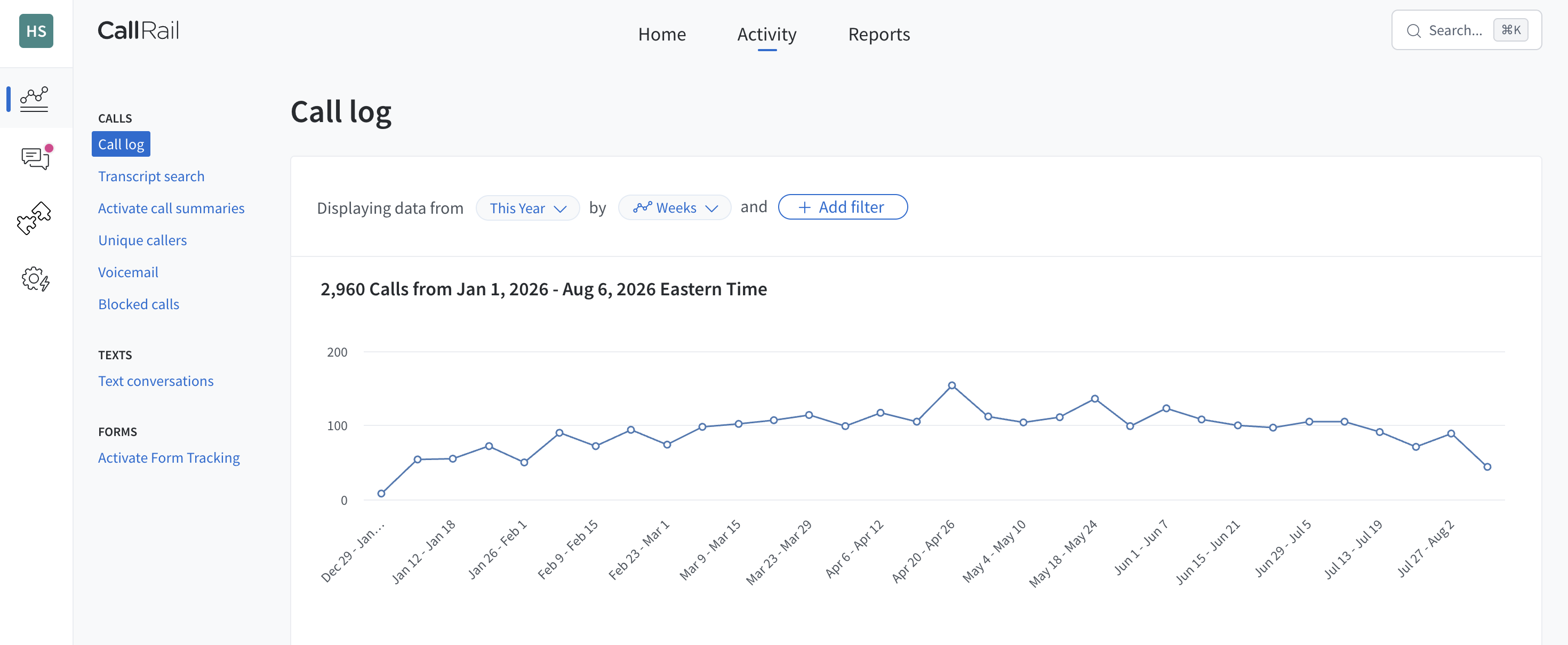
We pulled the full call log to see what three years of that system actually looks like. Since it went live, it's logged 6,939 calls across every tracked marketing line, not counting the calls that still come straight into the stores off the main listed number.
91.5% answered. Only 8.5% of tracked calls went to voicemail, got abandoned, or were missed outright.
60.3% first-time callers. Most calls are a new prospect, not a returning customer, which is exactly what you'd expect from a business that's still expanding.
67% originate from the website itself. The rest split between Google Ads call extensions (31%), Facebook, and Google Local Services Ads. The site isn't just a brochure, it's generating the majority of the phone volume.
Volume has roughly doubled. Monthly tracked call volume has grown from about 210 calls a month in the system's first six months to over 445 a month recently, right alongside the expansion from two locations to four.
What We're Still Doing Three Years In
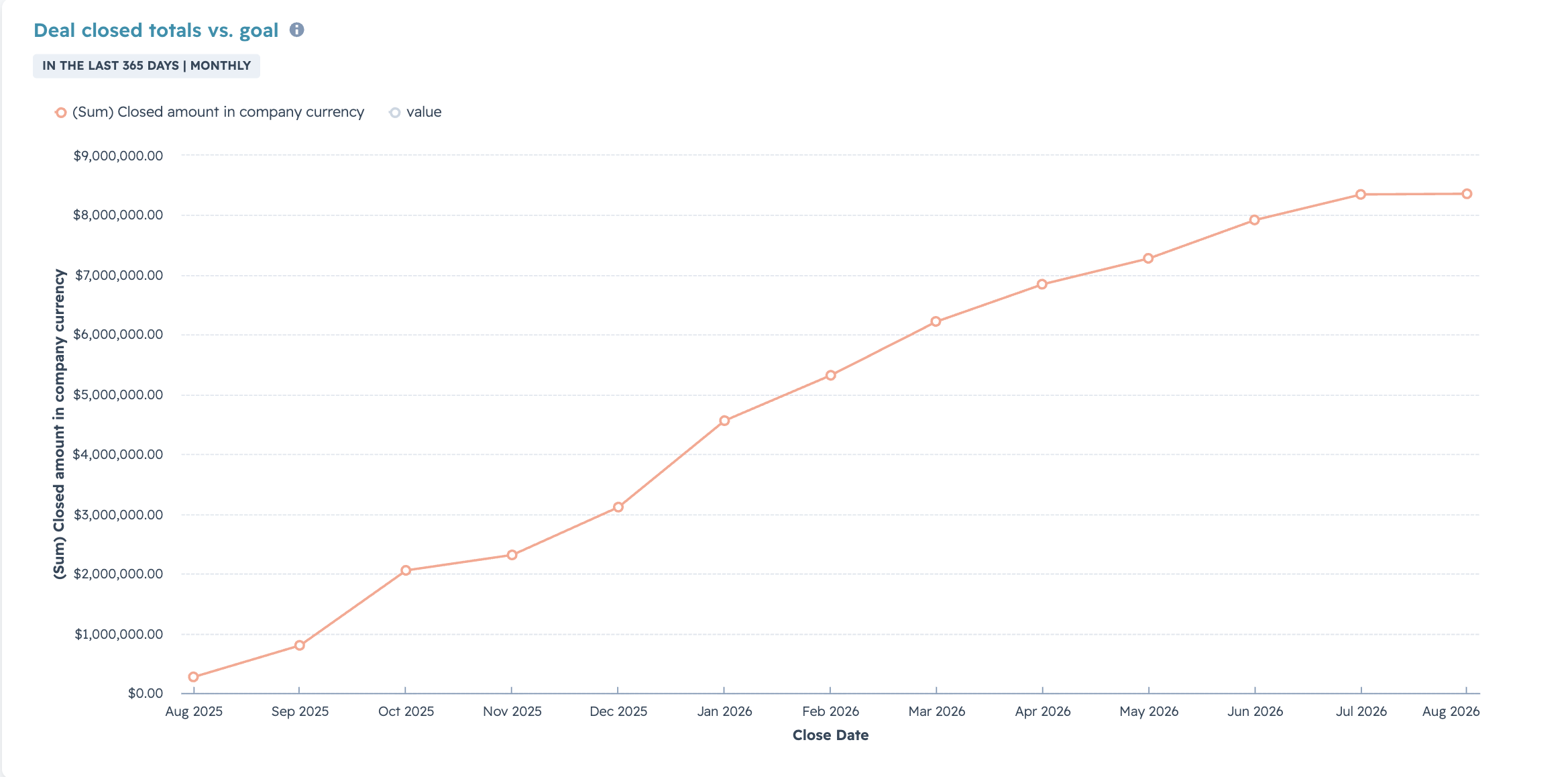
Hot Springs Pools & Spa's Revenue Tracked in HubSpot
Three years in, we're still doing the unglamorous version of this work. This year that's meant rewriting location pages so they're readable by AI search tools, not just Google, with real storefront photos and addresses instead of a stock photo template. It's meant cloning and testing Facebook ads into a real double-digit cluster instead of running two ads and hoping. Ad campaigns are split by market too, Greenville, Asheville, Franklin, and Charleston each run their own, instead of one blended campaign treating a Charleston lead the same as a Greenville one. We even ran a same-day competitive audit using Claude and Semrush and found there just aren't many well-made hot tub ads running on Facebook right now, which told us exactly where to put effort.
Hot tub sales were up 40% in the first quarter after the new brand and site launched, and it's compounded since. The business has grown from two locations to four in the three years we've worked together.
None of this is complicated. It's just done, consistently, with real data behind it.
Frequently Asked Questions
How do you fix a business that's getting calls but can't track where they come from?
Start with call tracking software, we use CallRail, tied to a CRM like HubSpot, so every call is attributed to a source, assigned to a person, and followed through to a close or a loss. For Hot Springs Pools & Spas, that's tracked 6,939 calls since, with monthly volume roughly doubling as the system matured, turning what used to be a total unknown into a real, defensible sales pipeline.
What's the difference between call tracking and a CRM?
Call tracking software, like CallRail, assigns a unique phone number to each marketing channel so you know which source generated a specific call. A CRM, like HubSpot, is where that call becomes a tracked lead: assigned to a person, moved through a pipeline, and followed to a close or a loss. You need both. Call tracking tells you where a lead came from; a CRM tells you what happened to it.
How do I know if my business has an untracked-calls problem?
A few signs: the same phone number appears on your website, your ads, and your listings, so you can't tell which one drove a given call. Salespeople can't say which lead came from which source. And when someone asks "what's actually working," the honest answer is a guess. If any of that sounds familiar, the fix is usually smaller than it seems, dedicated tracked numbers and a CRM that logs the outcome.
Is call tracking worth it for a small or multi-location business?
Yes, arguably more for multi-location businesses than single-location ones. Without it, you can't tell whether a lead in one market is coming from the same channel driving results in another, and you end up making budget decisions off blended numbers that hide what's actually working market by market.
Why rewrite location pages for AI search tools instead of just Google?
Because more buyers are starting their research in AI assistants and answer engines, not just a traditional search bar. Location pages with real storefront photos, accurate addresses, and specific local content perform better in both, instead of a thin, templated page built only for one search engine.
How long did it take to see results?
Hot Springs Pools & Spas has been a client for three years and has grown from two locations to four in that time. The unglamorous work, tracking, tagging, follow-up, compounds; it isn't a one-time fix.
How much has tracked call volume actually grown?
Monthly tracked call volume has roughly doubled, from an average of about 210 calls a month in the system's first six months to over 445 a month recently, across 6,939 total tracked calls since the system went live.
The Bottom Line
If your business runs on phone calls, can you actually say where your last ten came from?